
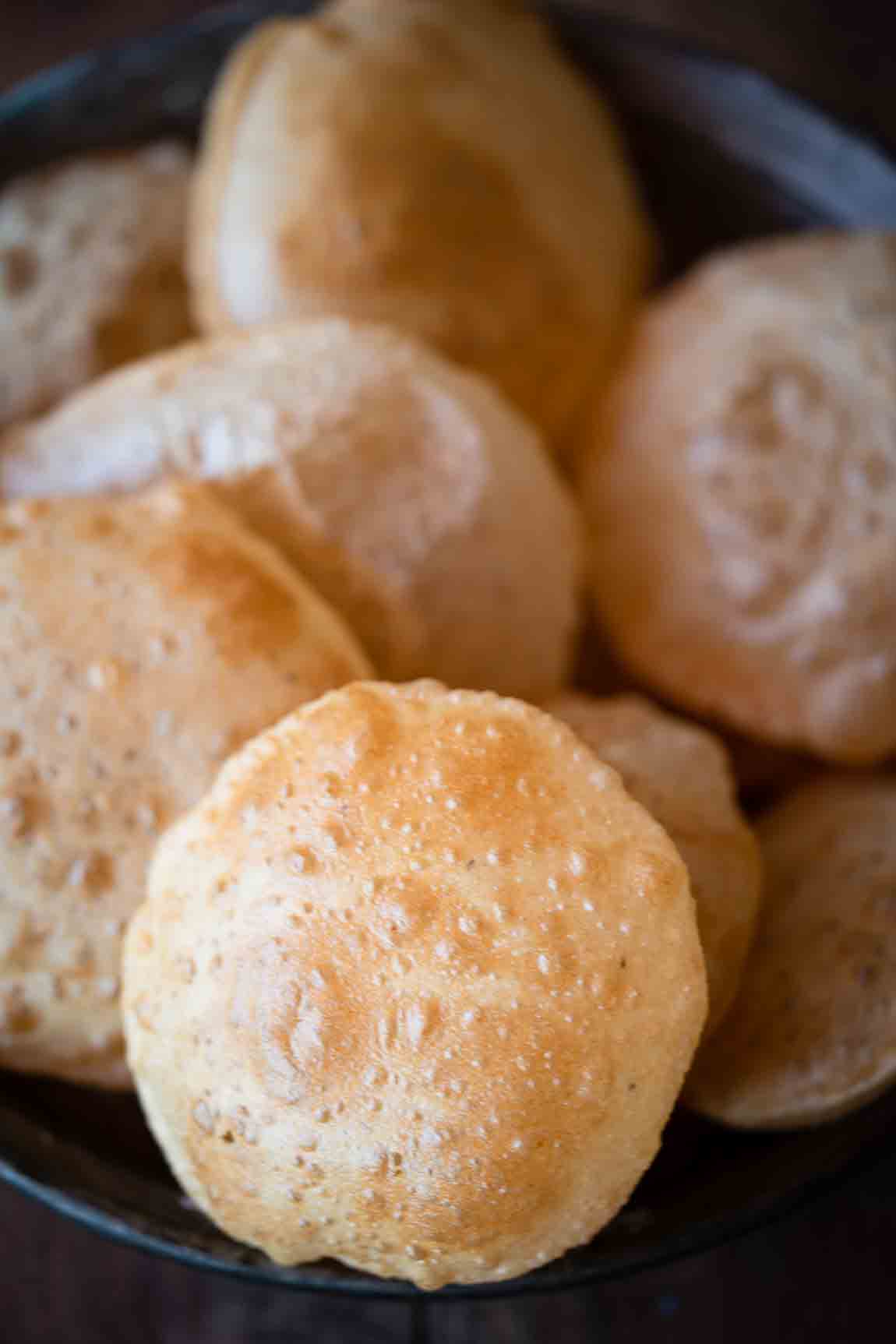
There are some foods that instantly take you back, no effort required. For me, this poori recipe does exactly that. It’s not only something I grew up eating – it’s something that travelled with me through my childhood. Any trip felt incomplete without a tiffin packed with soft pooris and sukhi aloo ki sabzi. Just opening that box midway through a journey felt comforting.
When I moved away for college, those homebound journeys became even more emotional. My parents would send the car to pick me up, and without fail, there would be a tiffin waiting for me in the car – fresh pooris and dry aloo sabzi, made early in the morning so I could eat on the way. It wasn’t just food; it was their way of saying, “You’re home.” Every bite felt like ‘maa ka pyaar’ after months away.
Now, years later, I find myself standing in the same setting, making pooris and packing them into my child’s tiffin. Life has quietly come full circle. Somewhere between those childhood journeys and busy mornings, this poori recipe became more than just a dish – it became a part of my story, passed on with the same warmth I once received.

What Makes a Perfect Soft Puffy Poori?
For me, a good poori is one that feels light the moment you pick it up. It should puff beautifully, stay soft from the inside, and never feel greasy or heavy. I’ve always preferred small and thin pooris rather than big, thick ones that fill you up too quickly.
Over the years, I’ve realised that soft, puffy pooris are really about getting a few simple things right:
- The dough consistency matters – the dough should be firm, when you press the dough with a finger, it should retain the dent lightly. If it springs back completely, it is too soft and will give you oily pooris
- Let the dough rest just enough (15-20 mins is good enough), not too long
- The oil temperature should be medium
- When fried right, the poori should puff easily, stay soft even after cooling, and taste just as good when packed for later
It’s this balance that turns a simple poori into something truly comforting.



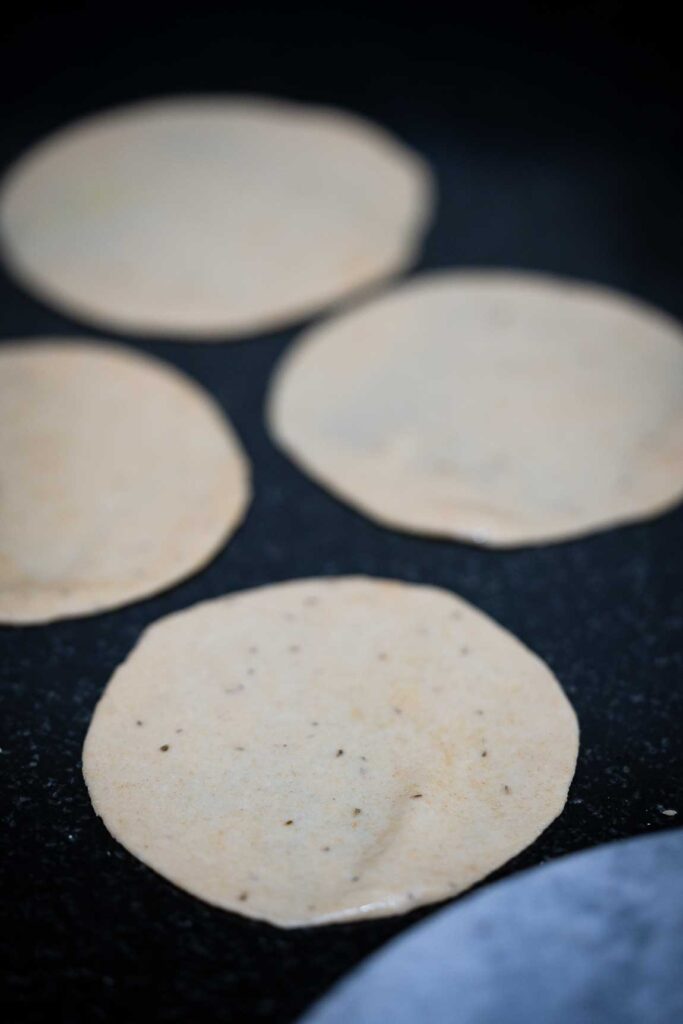
Ingredients for Homemade Poori Recipe
One of the things I love most about making pooris is how simple the ingredient list is. No fancy additions, no complicated steps – just everyday pantry staples that come together beautifully.
- Whole wheat flour (atta)
- Salt
- Oil (for dough)
- Water (to knead)
- Oil (for deep frying)
My Personal Poori Preferences & Tips (From My Kitchen)
Every kitchen has its own little rules, and these are the ones I swear by when it comes to making soft, puffy pooris. They’re not complicated – just things I’ve learned over time by cooking for family, packing tiffins, and standing by the stove on busy mornings.
Here’s what works best for me:
- I always roll small, thin pooris – they puff better and feel much lighter
- The dough texture matters more than anything else
- I never let the dough rest beyond 20 minutes, or the dough gets loose, and pooris turn oily
- For me, the poori dough needs to be a combination of mathri dough + paratha dough.
- The oil should stay at a medium temperature throughout frying
- I gently press the poori with a spatula to help it puff up
- I flip it when the first side turns light golden brown
These little details may seem small, but together they make a noticeable difference.
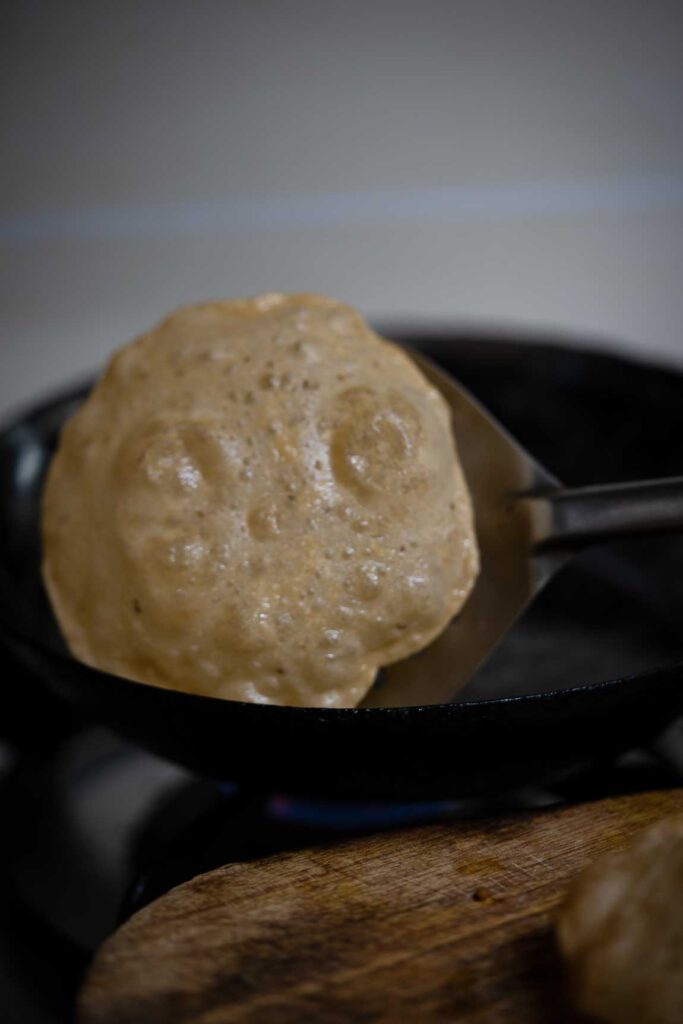
How I Drain Pooris – An Eco-Friendly Habit I Follow
This is one small habit I’ve consciously picked up in my kitchen over the years. Instead of reaching for tissue paper to drain excess oil, I place freshly fried pooris straight onto a wooden chopping board. It works beautifully for me because:
- The board absorbs the extra oil naturally
- I avoid using disposable paper, which feels better environmentally
- Over time, the oil actually helps condition the wooden board, increasing its longevity
It may seem like a tiny change, but it’s one of those little kitchen choices that feels right – good for the food, good for the board, and good for the environment. A quiet win-win.
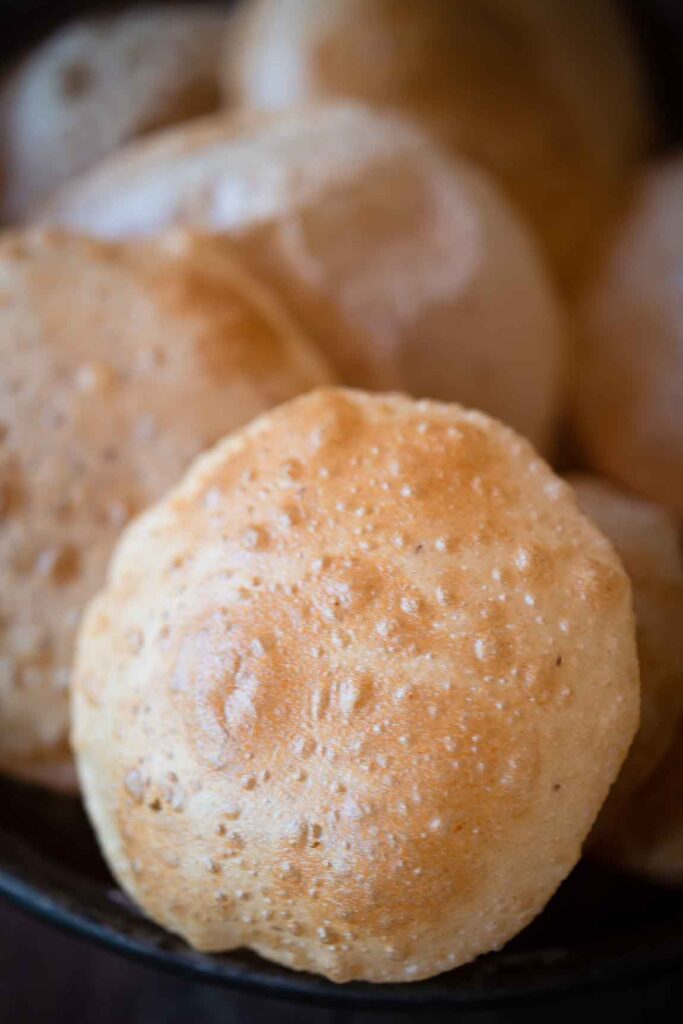
Best Side Dish to Serve with Poori
For me, poori has always meant one thing – sukhi aloo ki sabzi. It’s the kind of pairing that never gets old, no matter how many times you’ve had it. Some other delicious side dishes you can try with poori:
- Chole – perfect for indulgent weekend breakfasts
- Aloo tamatar – lightly spiced and comforting
- Paneer Bhurji – for a richer, protein-packed meal
- Mango pickle & curd – simple, nostalgic, and very underrated
No matter what you pair it with, poori has a way of turning any meal into something special – one bite at a time. You can also try variations of pooris, such as Tricolor Poori.
How to Make Soft Puffy Poori at Home – Step-by-Step

Soft Puffy Poori | Traditional Wheat Poori Recipe
Ingredients
- 2 cups whole wheat flour
- ½ tsp carom seeds (ajwain)
- Salt to taste
- 1-2 tsp sugar (optional, for mild sweetness)
- 1 tbsp oil (for dough)
- Water for kneading
- Oil for deep frying
Instructions
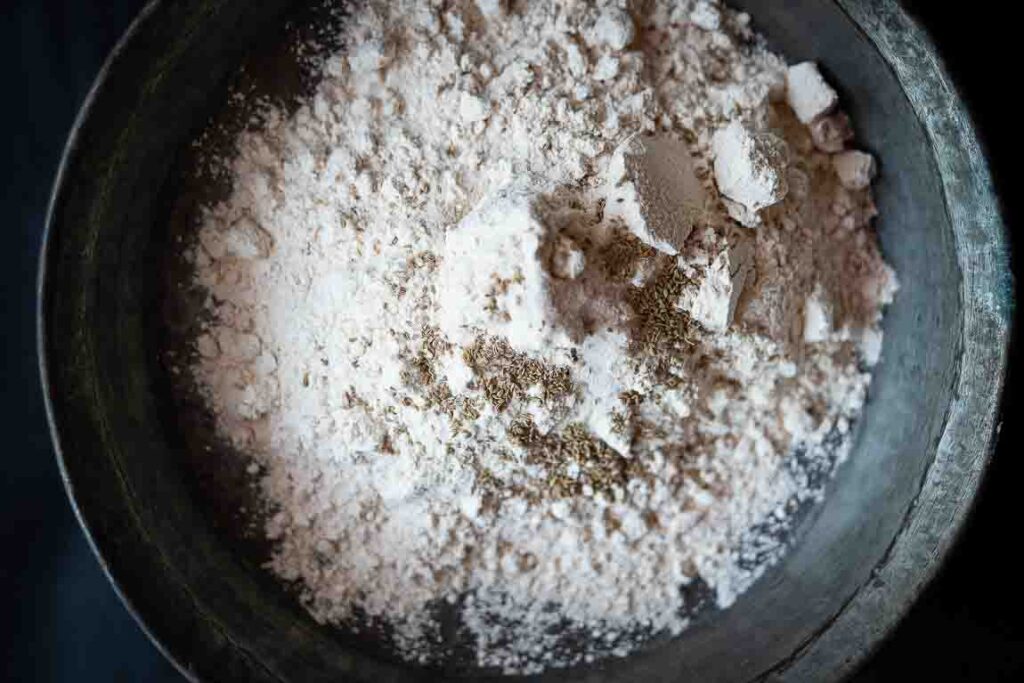
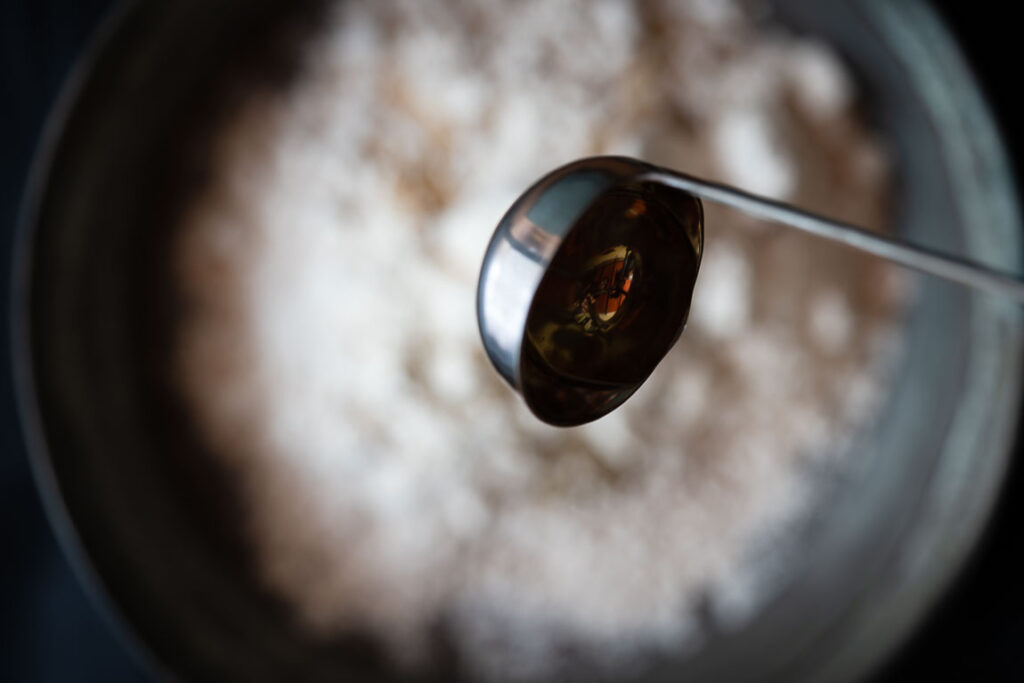
- Take whole wheat flour in a mixing bowl. Add salt, sugar (if using), carom seeds, and oil. Mix everything well.
- Gradually add water and knead into a semi-soft dough. To check, press a finger into the dough – if it springs back slightly, it’s ready. Cover with a lightly wet muslin cloth and keep aside.
- Let the dough rest for 15-20 minutes. Do not rest it longer, as over-resting makes pooris absorb more oil while frying.
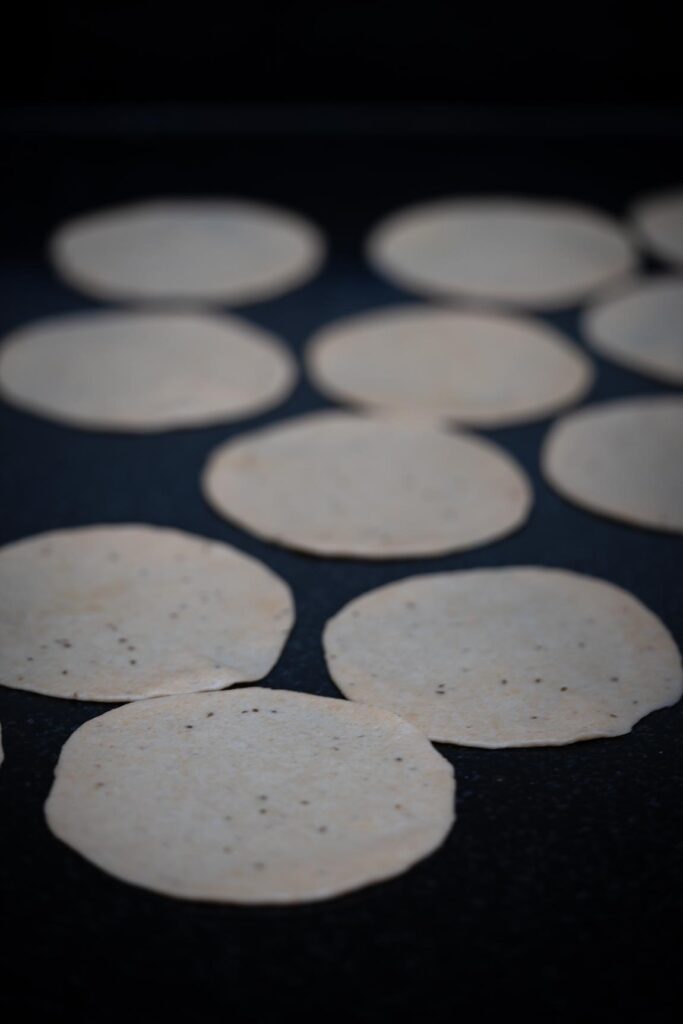
- Divide the dough into small balls and roll them into thin flat discs of approximately 4-5 inch diameter.
- Heat oil in a wok. To check if the oil is hot enough, drop a tiny pinch of dough into the oil. If it floats up immediately, the oil is ready.
- Heat oil in a wok. To check if the oil is hot enough, drop a tiny pinch of dough into the oil. If it floats up immediately, the oil is ready.
- Gently slide a rolled poori into the hot oil. Lightly press it with a frying spatula so it puffs up nicely.
Notes
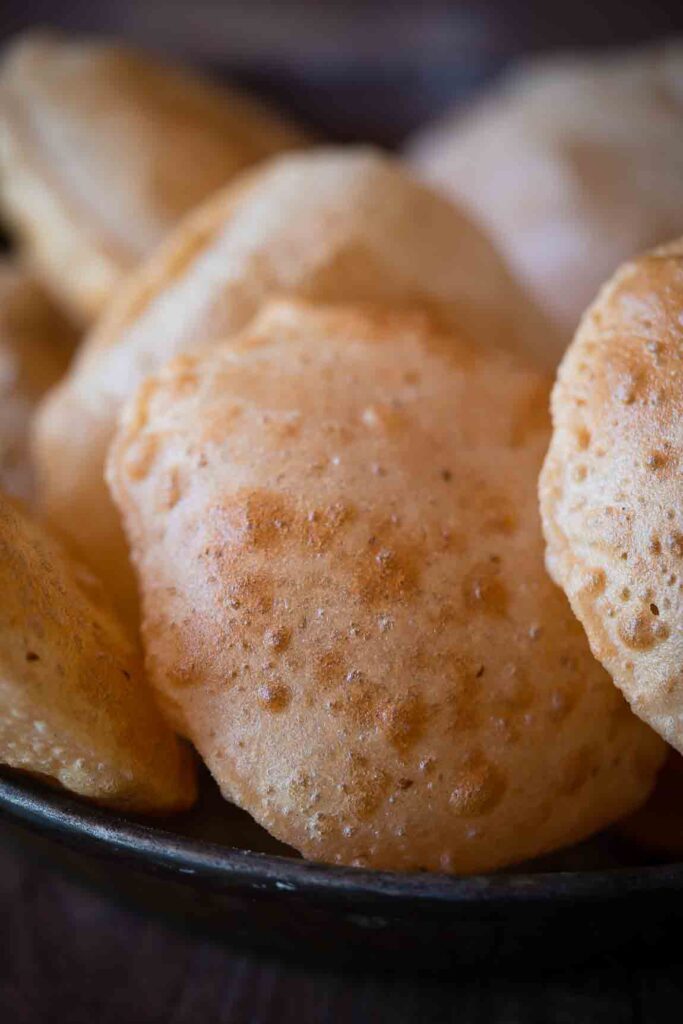
Final Thoughts:
If you try this poori recipe at home, I truly hope it brings you that same sense of warmth and nostalgia. And if you pack it for someone you love, whether it’s a child, a partner, or even yourself, remember – you’re not just packing food. You’re packing care, comfort, and a little piece of home.
FAQs on Poori Recipe | Puri Recipe
Pooris usually don’t puff when the dough is either too soft or too tight. Proper kneading is key – the poori dough should be firmer than paratha dough but softer than mathri dough. Also, oil temperature plays a big role; oil that’s too hot or too cold can stop the poori from puffing evenly.
Yes, poori dough can be prepared slightly in advance, but timing matters. Ideally, the dough should rest for about 20 minutes and be used within that window. Resting it too long makes the dough loose, causing pooris to absorb more oil while frying.
Neutral oils with a high smoke point work best for a poori recipe. Refined sunflower oil, groundnut oil, or vegetable oil are great choices. These oils allow the poori to puff well without overpowering the taste or turning greasy.
To make less oily pooris, maintain medium-hot oil throughout frying. Avoid overcrowding the pan and gently press the poori with a slotted spatula to help it puff quickly – this reduces oil absorption. Proper dough resting also helps control excess oil.
If poori dough rests beyond 20 minutes, it loosens and absorbs more oil during frying. Over-rested dough also affects the texture, making pooris less puffy and slightly chewy. Short resting time keeps the pooris light, soft, and evenly puffed.
