
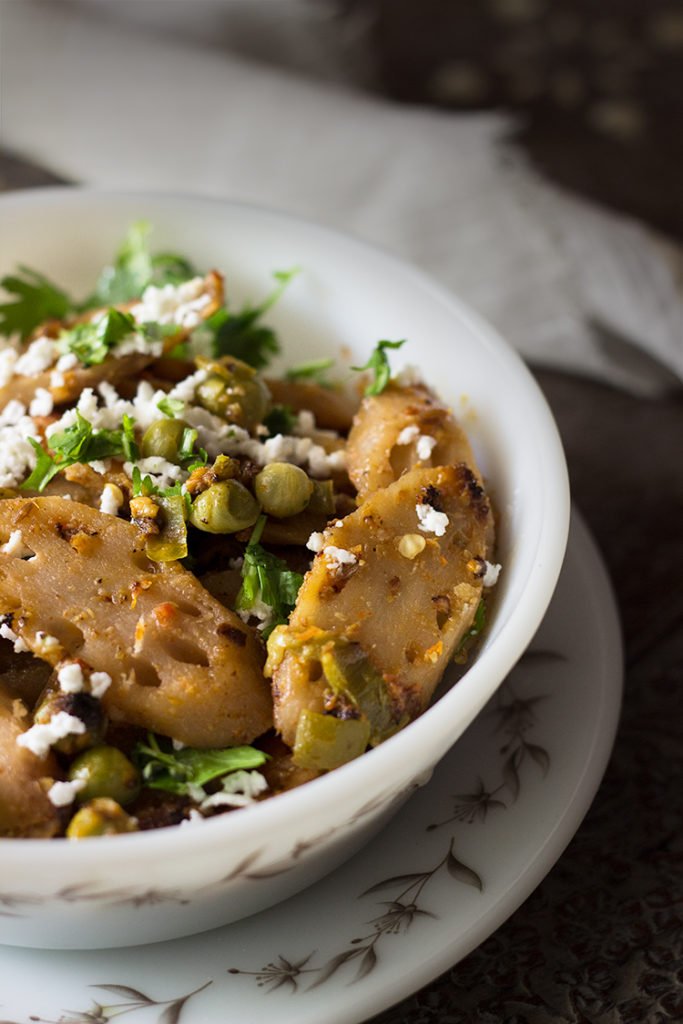
Kamal Kakdi ki Subzi is a savory mix made from root vegetable lotus stem and green peas in a flavorful spicy mix. Lotus stem (kamal kakdi) grows in ponds and it is a powerhouse of nutrients, which are stored in it’s roots.
Find out other rare ingredient preparations like Split Moong Dal Pakora Curry – Taazi Mangori, Jackfruit Veg (Kathal ki Subzi) – Again a mom special and Bajre ki Khichdi | Pearl Millet Khichdi.
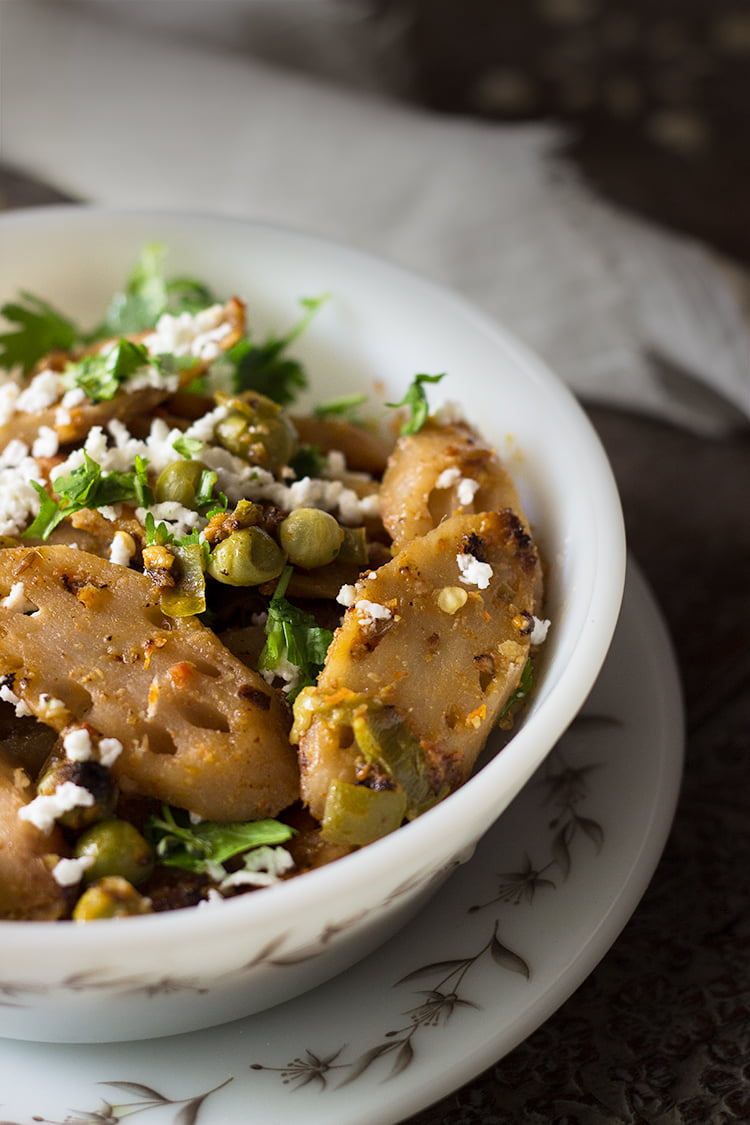
I absolutely love kamal kakdi but again a veg which we hardly get in Pune. This time when I visited Meerut, I told mom to source the stems and make this for me. I don’t think I have eaten kamal kakdi in last decade.
The recipe is very simple and you cook it like any vegetable. It tastes especially well with peas though. You can add potatoes also if you like. My mother prefers adding tomatoes to many of the dry veggies which lends a sour taste as well as interesting twist to the recipe.
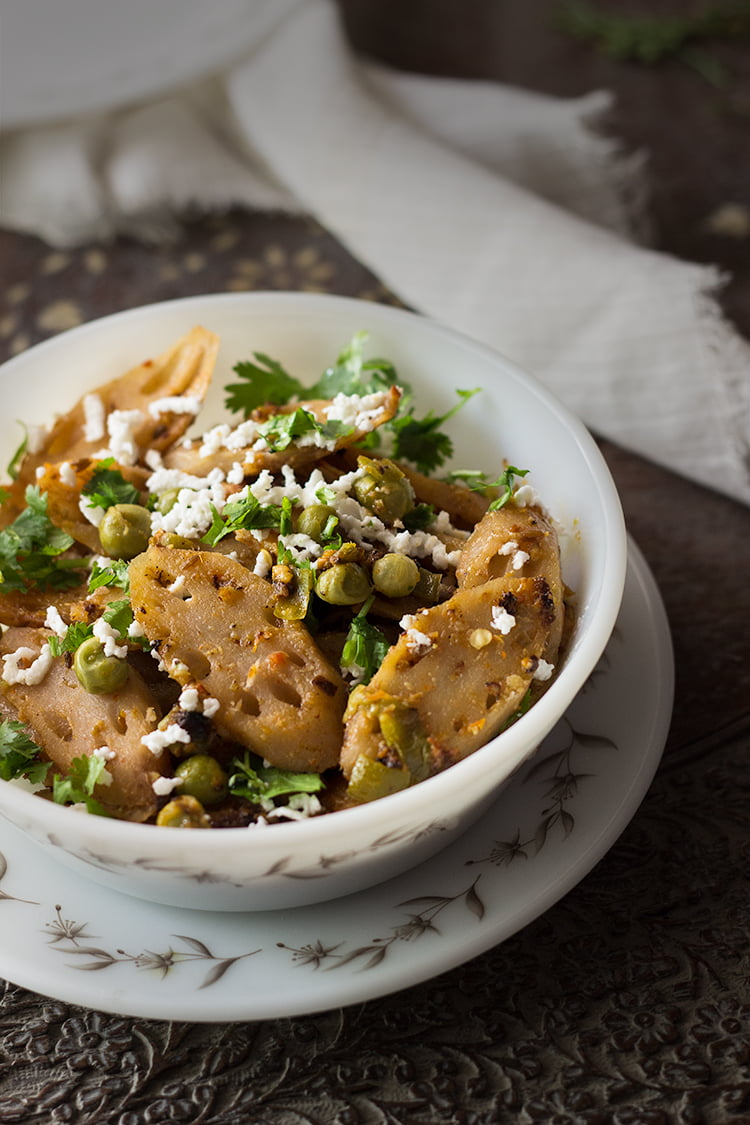
The lotus stem is crunchy and firm. A must try dish if you have never eaten it.
How to Clean and Cut Lotus Stem (Very Important)
The first time I bought kamal kakdi (lotus stem), I was equal parts excited and confused 😄 It looks so earthy and muddy on the outside, but once you cut into it, that beautiful pattern makes you pause for a second. Cleaning it properly is the real secret here, because all that hidden mud inside those tiny holes needs a little extra love. But once you get the hang of it, prepping lotus stems for sabzi becomes almost therapeutic.
- Pat dry before cooking to prevent excess moisture in the sabzi
- Peel the outer skin lightly to remove dirt and rough texture
- Slice into medium-thick rounds to reveal the signature pattern
- Wash the slices under running water to clean the mud inside the holes
- Soak in water for a few minutes to loosen any hidden dirt
- Use a toothpick or skewer if needed to clean stubborn particles inside the holes
- Avoid very thin slices as they can break while cooking
Tips for Perfect Kamal Kakdi Sabzi
You know how some recipes just click after a couple of tries? That’s exactly how Kamal Kakdi ki sabji felt for me. The first time, it was either too hard or not as flavourful… but once I figured out these little tricks, it turned into one of those dishes you can confidently make anytime. The goal is simple – that perfect balance of slightly crisp texture + masala that clings beautifully to every slice of lotus stem.
- Finish with a squeeze of lemon or amchur for a subtle tangy kick
- Always clean thoroughly to avoid any muddy taste in lotus stem sabzi
- Pre-boil the slices to ensure even cooking and a soft texture inside
- Don’t overboil – keep it slightly firm for that perfect bite
- Use mustard oil or ghee for an authentic North Indian flavour
- Let the masala cook properly until the oil separates for deep flavour absorption
- Cook on medium-high heat to get slightly crispy edges
- Avoid overcrowding the pan to help with proper roasting instead of steaming
- Add spices gradually to balance flavors without overpowering the sabzi
Variations of Kamal Kakdi Recipe
Once you get comfortable cooking kamal kakdi (lotus stem), it’s hard not to play around with it a little. I started with a simple dry kamal kakdi ki sabji, and then slowly, depending on my mood, it turned into so many different versions. That’s the fun part – this one ingredient adapts so beautifully, whether you want something spicy, tangy, or even a little indulgent.
- Try shallow frying first for an extra crispy texture
- Make a dry version for a crispy, everyday kamal kakdi sabzi
- Add tomatoes and gravy for a masaledar lotus stem curry
- Cook with potatoes for a hearty aloo kamal kakdi ki sabji
- Add curd for a slightly creamy and tangy twist
- Use pickle spices for a chatpata achar-style lotus stem recipe
- Toss with garlic and green chilies for a bold, spicy version
- Add a pinch of kasuri methi for a restaurant-style aroma
Health Benefits of Lotus Stem
I didn’t always think of kamal kakdi (lotus stem) as a “healthy” food – for me, it was just something I loved eating with garam phulkas. But over time, I realized this humble veggie is actually packed with goodness. It’s one of those ingredients that quietly does its job – keeping things light on the stomach while still being super satisfying. So basically, it’s comfort food and smart eating… best of both worlds, right?
- Light on the stomach, perfect for everyday home-style cooking
- Low in calories, making it great for weight-friendly meals
- Rich in fiber, which helps with better digestion and gut health
- Packed with vitamin C for boosting immunity naturally
- Contains iron, which supports healthy blood circulation
- Helps in maintaining stable blood sugar levels
- Good for heart health due to its potassium content
- Naturally hydrating, thanks to its high water content
How to Make Kamal Kakdi ki Sabji at Home?
Kamal Kakdi ki Subzi
Ingredients
- 3 lotus stems kamal kakdi
- 1 cup peas shelled
- 2 tomatoes chopped
- 1 tbsp mustard oil
- 2-3 green chilies chopped
- ½ tsp cumin seeds jeera
- 1 tsp gram flour besan
- ¼ tsp turmeric powder haldi
- 1 tsp coriander powder dhania powder
- ½ tsp red chili powder
- a pinch asafetida
- to taste salt
- grated cottage cheese paneer for garnishing
- fresh cilantro coriander leaves for garnishing
Instructions
- Bring mustard oil to a smoking-hot temperature, and gently roast all the spices. Add gram flour and further roast. Add green chili and chopped tomatoes. Cook slightly.
- Now add both peas and kamal kakdi to the prepared masala and cook covered on low flame till tender. Garnish as desired. Serve hot with chapatis or paranthas.
Notes
- You can even make kamal kakdi in gravy form. Will share the recipe if I get another batch of the lotus stems in Pune.
- The recipe is very simple and you cook it like any vegetable. It tastes especially well with peas though. You can add potatoes also if you like.
FAQs on Kamal Kakdi Ki Sabji Recipe
To make kamal kakdi ki sabji, clean and slice lotus stem, boil until slightly tender, then cook with spices until crispy and well-coated.
To clean lotus stem, peel it, slice into rounds, and wash thoroughly to remove mud from the holes.
Yes, lotus stem is rich in fiber, vitamins, and antioxidants, making it good for digestion and overall health.
Lotus stem has a mild, slightly sweet taste and a crunchy texture that absorbs spices well.

Good to know the recipe,will share with closed ones but i dont like lotus stem.
The recipe sounds tasty .It’s difficult to get these where I live.
Thanks Amrita. Its not found in Pune as well. So I made it when I was visiting my mother in north India.